
Roth 401(k) vs. Traditional 401(k): What’s the Difference?
Saving for retirement is one of the smartest financial decisions you can make, but deciding how to save can be just as important. If your employer offers both a Traditional 401(k) and a Roth 401(k), you may be wondering which one makes the most sense for your situation.
The truth is, there isn’t a one-size-fits-all answer. Each option has unique tax advantages, and the right choice depends on your current income, future retirement plans, and overall financial goals.
Let’s break down the differences.
What Is a Traditional 401(k)?
A Traditional 401(k) is the retirement plan most people are familiar with.
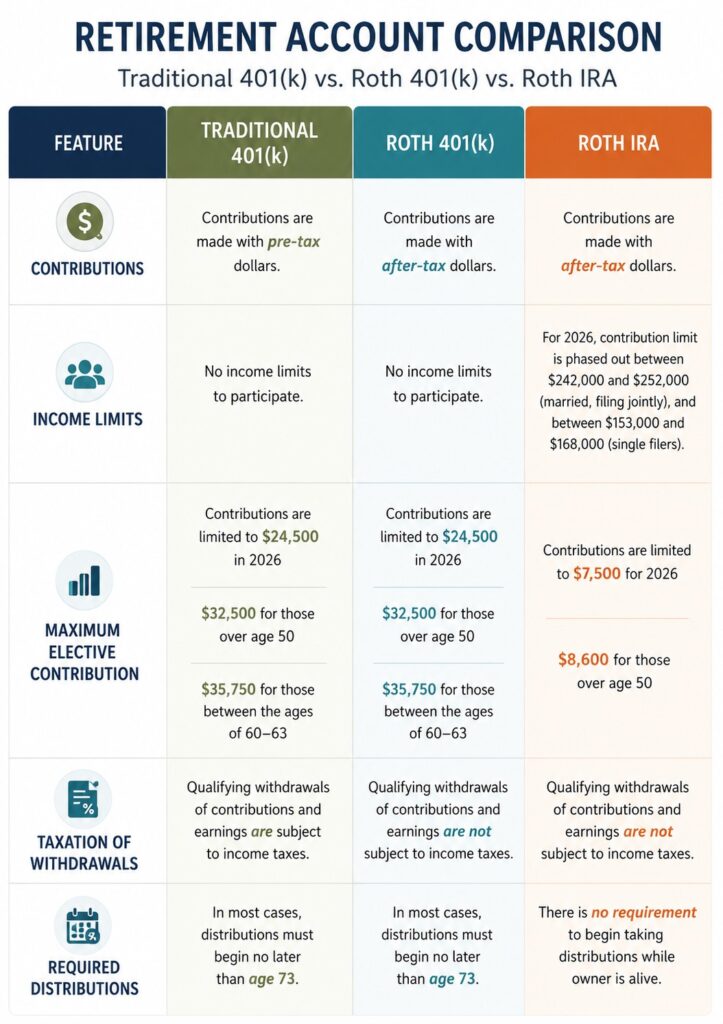
When you contribute to a Traditional 401(k), your contributions are made before taxes. This means the money you contribute lowers your taxable income for the year, potentially reducing the amount of income tax you owe today.
Your investments then grow tax-deferred, meaning you won’t pay taxes on investment gains while the money remains in the account.
However, when you retire and begin taking withdrawals, those distributions are generally taxed as ordinary income.
Benefits of a Traditional 401(k)
- Reduces your taxable income today.
- Allows investments to grow tax-deferred.
- Can be especially beneficial if you’re currently in a higher tax bracket than you expect to be in during retirement.
- Employer matching contributions are common and can significantly boost your retirement savings.
What Is a Roth 401(k)?
A Roth 401(k) works differently from a tax standpoint.
Contributions are made with after-tax dollars, meaning you pay income taxes on the money before it goes into your account. Because of this, contributing to a Roth 401(k) won’t reduce your taxable income today.
The major advantage comes later.
As long as certain IRS requirements are met, qualified withdrawals—including both your contributions and investment earnings—are tax-free in retirement.
This means you pay taxes now in exchange for tax-free income later.
Benefits of a Roth 401(k)
- Qualified withdrawals in retirement are tax-free.
- Investment earnings can grow tax-free for decades.
- Provides flexibility in retirement tax planning.
- Can be especially attractive for younger workers or anyone who expects to be in a higher tax bracket in retirement.
What About Employer Matching?
One common misconception is that employer matching works differently depending on which account you choose.
The good news is that if your employer offers a match, you’ll generally receive it whether you contribute to the Traditional or Roth 401(k).
Keep in mind, however, that employer matching contributions are typically made on a pre-tax basis. That means those matching dollars may still be taxable when withdrawn in retirement, even if your own contributions were made to a Roth 401(k).
Which Option Is Better?
The answer depends on your personal situation.
A Traditional 401(k) may make more sense if you:
- Are currently in one of your highest earning years.
- Want to reduce your taxable income today.
- Expect to be in a lower tax bracket during retirement.
A Roth 401(k) may be worth considering if you:
- Are early in your career.
- Believe tax rates may be higher in the future.
- Want the peace of mind that comes with tax-free withdrawals in retirement.
- Prefer building a source of tax-free retirement income.
Can You Contribute to Both?
In many employer-sponsored retirement plans, yes.
Some plans allow you to split your contributions between Traditional and Roth accounts. This strategy can provide valuable tax diversification, giving you both taxable and tax-free sources of retirement income.
Having both types of accounts can provide greater flexibility when managing taxes during retirement.
The Bottom Line
Choosing between a Traditional and Roth 401(k) isn’t about finding the “better” account—it’s about finding the option that best fits your financial goals and long-term tax strategy.
The decision you make today can have a lasting impact on how much of your retirement savings you’ll ultimately keep after taxes.
If you’re unsure which option is right for you, working with a financial advisor can help you evaluate your current tax situation, estimate future retirement income, and build a retirement strategy that’s tailored to your unique goals.
At Lockwood Financial, we believe retirement planning is about more than simply saving money—it’s about making thoughtful decisions that help you keep more of what you’ve worked so hard to earn. If you’d like guidance on your retirement savings strategy, we’re here to help.
This material is provided for general and educational purposes only and is not intended as tax advice. Please consult your tax advisor for advice regarding your personal tax situation.

| Philip Lockwood | Founder + Managing Partner |
| Address | 1501 Ingersoll Ave. Suite 201 Des Moines, IA 50309 Phone | 515-274-8006 |
| Email | Plockwood@parklandrep.com Website | Lockwood Financial Strategies Securities offered through Parkland Securities, LLC, member FINRA (FINRA.org) and SIPC (SIPC.org). Investment Advisory services offered through SPC, a Registered Investment Advisor. Lockwood Financial Strategies, LLC is independent of Parkland Securities, LLC and SPC |