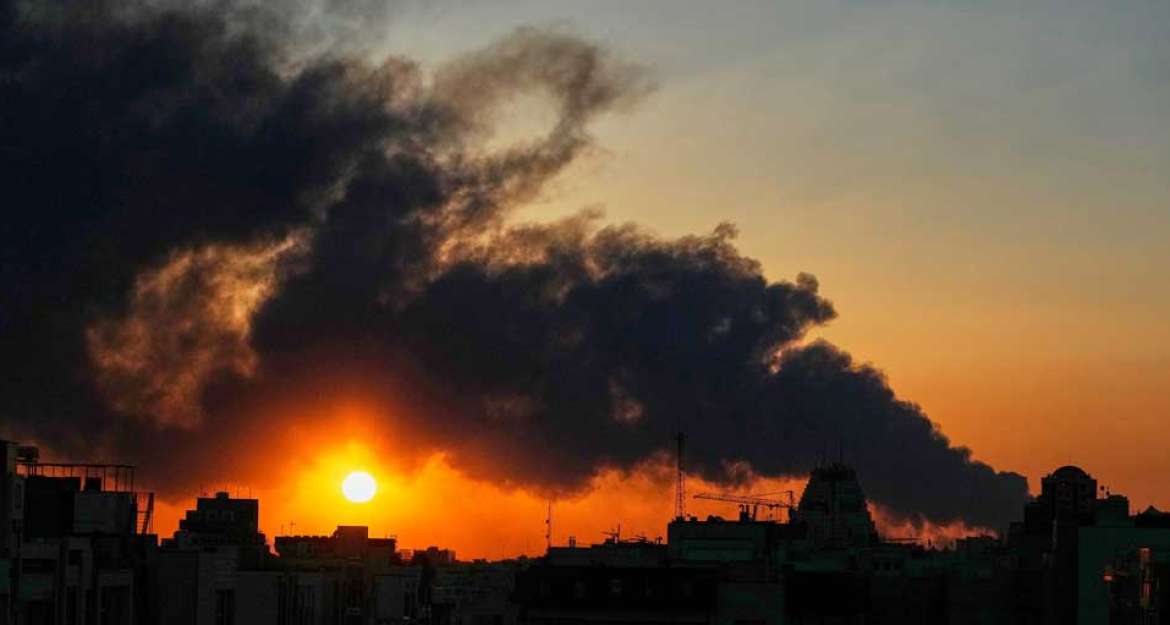
Markets, War, and Oil: Lessons from History
Historically speaking this is the path that markets tend to take when we are in time of geopolitical risk/war
- Initial drop when the event happens
- Stabilization as uncertainty declines
- Recovery within months to a year in most cases
S&P 500 Performance After Major Geopolitical Events
| Event | Immediate Reaction | 12-Month Return |
| Iraq invades Kuwait (1990) | 15% drawdown before war | Strong recovery after war began |
| 9/11 Terror Attacks (2001) | 5% drawdown first day | +2.7% after 3 years |
| Iraq War Begins (2003) | Market actually rose | +29% after 12 months |
| Crimea Annexation (2014) | Minimal reaction | +14.7% after 12 months |
| Iran tensions (2020) | Small decline | +17.6% after 12 months |
“Does Geopolitical Crisis Equal Market Crisis?” T. Rowe Price Insights.
Accessed March 9, 2026.
https://www.troweprice.com/en/us/insights/does-geopolitical-crisis-equal-market-crisis
What the Long-Term Data Shows
Research across post-WWII conflicts shows:
- Stocks were positive 1 year later in ~73% of geopolitical conflicts
- Drawdowns tend to be short-lived
- Markets usually recover once the uncertainty becomes clearer
Hartford Funds Investment Insights Team.
“Military Conflicts May Rattle Markets, but Not for Long.” Hartford Funds.
Accessed March 9, 2026.
https://www.hartfordfunds.com/practice-management/client-conversations/managing-volatility/military-conflicts-may-rattle-markets-but-not-for-long.html
Typical pattern:
- Week 1–2: volatility spike
- 1–3 months: stabilization
- 6–12 months: recovery and often positive returns
One Important Exception
Not every conflict is harmless for markets. The two biggest historical market declines tied to wars were:
S&P 500 Responses to Military Conflicts Since World War II
| Event | Start Date | Trading Days to Trough | % Decline to Trough | Trading Days to Recover |
| N. Korea invades S. Korea | June 25, 1950 | 15 | -12.9% | 56 |
| U.S. spy plane shot down in USSR | May 7, 1960 | 2 | -0.6% | 4 |
| Bay of Pigs invasion | April 15, 1961 | 6 | -3.0% | 14 |
| Cuban Missile Crisis | Oct. 16, 1962 | 6 | -6.3% | 13 |
| Gulf of Tonkin Incident (Vietnam) | Aug. 2, 1964 | 4 | -2.2% | 29 |
| Lead-up to Six-Day War | May 14, 1967 | 15 | -5.6% | 20 |
| Tet Offensive (Vietnam) | Jan. 29, 1968 | 25 | -6.0% | 46 |
| Cambodian Campaign (Vietnam) | May 1, 1970 | 18 | -14.9% | 86 |
| Yom Kippur War / Arab Oil Embargo | Oct. 6, 1973 | 42 | -16.1% | ~6 Years |
| Soviet-Afghan War | Dec. 24, 1979 | 7 | -2.3% | 10 |
| Intervention in Grenada | Oct. 25, 1983 | 11 | -2.8% | 15 |
| Lead-up to Panama Intervention | Dec. 15, 1989 | 2 | -2.2% | 8 |
| Iraq invades Kuwait | Aug. 2, 1990 | 50 | -15.9% | 131 |
| Lead-up to Gulf War | Jan. 1, 1991 | 6 | -5.7% | 13 |
| Intervention in Yugoslavia | Mar. 24, 1999 | 3 | -4.1% | 11 |
| U.S. spy plane captured in China | Apr. 1, 2001 | 3 | -4.9% | 7 |
| War in Afghanistan | Oct. 7, 2001 | 1 | -0.8% | 3 |
| Lead-up to Iraq War | Feb. 5, 2003 | 24 | -5.6% | 28 |
| Russia invasion of Ukraine | Feb. 11, 2022 | 17 | -7.4% | 27 |
Oil Shock Comparison – 1973 vs 2022
| Category | 1973 Arab Oil Embargo | 2022 Russia–Ukraine Oil Shock |
| Oil Price Spike | Oil prices quadrupled from ~$3 to ~$12 per barrel | WTI crude rose above $90 for six months, peaking near $124 |
| Supply Impact | Major supply disruption due to OPEC embargo | Supply largely rerouted rather than removed |
| U.S. Energy Position | U.S. heavily dependent on imported oil | U.S. one of the largest oil producers in the world |
| Market Flexibility | Limited global trading networks | Global markets quickly redirected Russian oil to Asia |
| Geographic Impact | Global economic impact | Europe heavily impacted; North America less affected |
| Economic Sensitivity | Economy highly dependent on oil | Economy more energy efficient |
| Policy Environment | Policy mistakes worsened inflation | Central banks reacted faster to inflation risks |
| Corporate Earnings | Many businesses struggled due to higher energy costs | Energy sector profits increased, supporting earnings |
| Stock Market Impact | S&P 500 took ~6 years to recover | Market selloff was shorter and less severe |
| Investor Sentiment | Many investors abandoned equities | Investors remained invested despite volatility |
RBC Wealth Management.
“Then and Now: Market Reactions to Military Conflicts and What They Mean Today.” RBC Wealth Management Perspectives.
Accessed March 9, 2026.
https://us.rbcwealthmanagement.com/craig.redcay/blog/5392973-Then-and-now-Market-reactions-to-military-conflicts-and-what-they-mean-today
Takeaway (my opinion)
While geopolitical conflicts understandably create concern and short-term market volatility, today’s energy landscape is fundamentally different from the environment that existed during the 1973 oil crisis.
The United States is now the largest oil producer in the world, and the shale revolution has dramatically increased global supply. North America—particularly the U.S. and Canada—produces a significant portion of its own energy, reducing dependence on foreign producers and making supply disruptions less likely to create the type of systemic shock seen in the 1970s.
In addition, the Strategic Petroleum Reserve gives policymakers a tool that did not meaningfully exist during that period. Governments now have the ability to release oil into the market to help stabilize supply during times of disruption.
History also provides an important reminder for investors. While geopolitical events can create short-term volatility, markets have typically recovered relatively quickly once uncertainty begins to fade. In many cases, periods of heightened concern have ultimately proven to be temporary interruptions within much longer-term economic and market growth trends.
For long-term investors, maintaining discipline during uncertain periods is often the most important decision. Markets will always face geopolitical challenges, but the long-term trajectory of economic growth, innovation, and corporate earnings has historically proven far more powerful than temporary disruptions.

| Philip Lockwood | Founder + Managing Partner |
| Address: 1501 Ingersoll Ave. Suite 201 Des Moines, IA 50309 Phone: 515-274-8006 |
| Email: Plockwood@parklandrep.com Website: Lockwood Financial Strategies Securities offered through Parkland Securities, LLC, member FINRA (FINRA.org) and SIPC (SIPC.org). Investment Advisory services offered through SPC, a Registered Investment Advisor. Lockwood Financial Strategies, LLC is independent of Parkland Securities, LLC and SPC |